
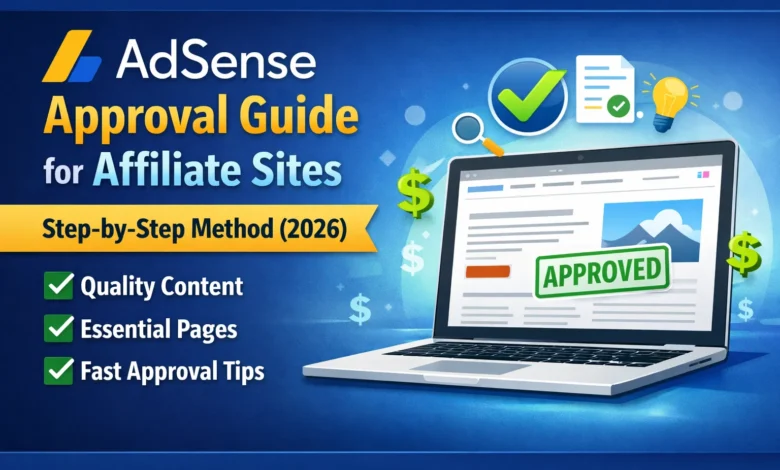
AdSense Approval Guide for Affiliate Sites (Step-by-Step) 2026
Getting Google AdSense approval for an affiliate website is absolutely possible—but only if your site follows Google’s quality guidelines. Many affiliate sites get rejected because they look spammy, thin, or purely promotional.
In this guide, you’ll learn how to prepare an affiliate site for AdSense approval, what Google checks, common mistakes, and proven fixes.
Can Affiliate Sites Get AdSense Approval?
Yes.
Google allows affiliate websites to use AdSense as long as the site provides real value to users.
🚫 What Google does NOT like:
- Pages filled only with affiliate links
- Copied product descriptions
- Low-effort review posts
- “Buy now” content with no helpful information
✅ What Google wants:
- Informational, original, and user-focused content
- Clear purpose beyond selling
What Google Checks Before Approving an Affiliate Site
Google reviews your site manually and automatically. Here are the key factors they check:
1. High-Quality Content (Most Important)
Your affiliate site must include informational content, not just money pages.
Best content mix for approval:
- 70% informational articles
- 30% affiliate content
Examples:
- How-to guides
- Comparison articles (with real analysis)
- Problem-solving content
- Beginner guides
👉 Each article should be 800–1500+ words, well-structured, and original.
2. Avoid Thin Affiliate Pages
Thin content is the #1 reason for rejection.
❌ Thin content example:
“This is the best hosting. Buy now using my link.”
✅ Google-safe alternative:
- Explain the problem
- Compare multiple solutions
- Share pros & cons
- Add FAQs
- Then include affiliate links naturally
3. Affiliate Disclosure Page (Required)
Google expects transparency.
Create a page titled:
- Affiliate Disclosure
- Disclosure Policy
Example statement:
“This website contains affiliate links. If you purchase through these links, we may earn a commission at no extra cost to you.”
Link it in:
- Footer
- Menu
4. Essential Pages (Must Have)
Your site must look like a real brand, not a quick affiliate setup.
Required pages:
- About Us
- Contact Us
- Privacy Policy
- Terms & Conditions
- Affiliate Disclosure
💡 Use professional language and avoid copied templates.
5. Clean Website Design & Navigation
Google checks user experience.
Best practices:
- Mobile-friendly theme
- Fast loading speed
- Clear menu structure
- No popup spam
- No excessive ads
Your site should look helpful, not aggressive.
6. Avoid Over-Optimization & Spam
🚫 Avoid:
- Keyword stuffing
- Repetitive affiliate links
- Auto-generated content
- AI content without editing
✅ Do:
- Use keywords naturally
- Write for humans first
- Add personal insights or research
7. Minimum Content Before Applying
There is no official number, but safe practice is:
- 15–30 high-quality posts
- At least 10 informational articles
- No empty categories or tags
Your site should feel complete, not under construction.
8. Traffic Is NOT Mandatory (But Helps)
You don’t need traffic to get AdSense approval.
However:
- Indexed pages
- Proper SEO
- Organic impressions
…increase approval chances.
Common Reasons Affiliate Sites Get Rejected
- “Thin content”
- “Site not ready”
- “Low value content”
- “Purely commercial intent”
👉 All of these are fixable by adding value-based content.
Final Checklist Before Applying
✔ Original, helpful content
✔ Informational articles added
✔ Affiliate disclosure page
✔ All legal pages ready
✔ Clean design
✔ No copied content
✔ Proper internal linking
Final Thoughts
An affiliate site can get AdSense approval easily if it focuses on helping users first and selling second.
Think like Google:
“Does this page genuinely help someone?”
If the answer is yes, approval will follow.